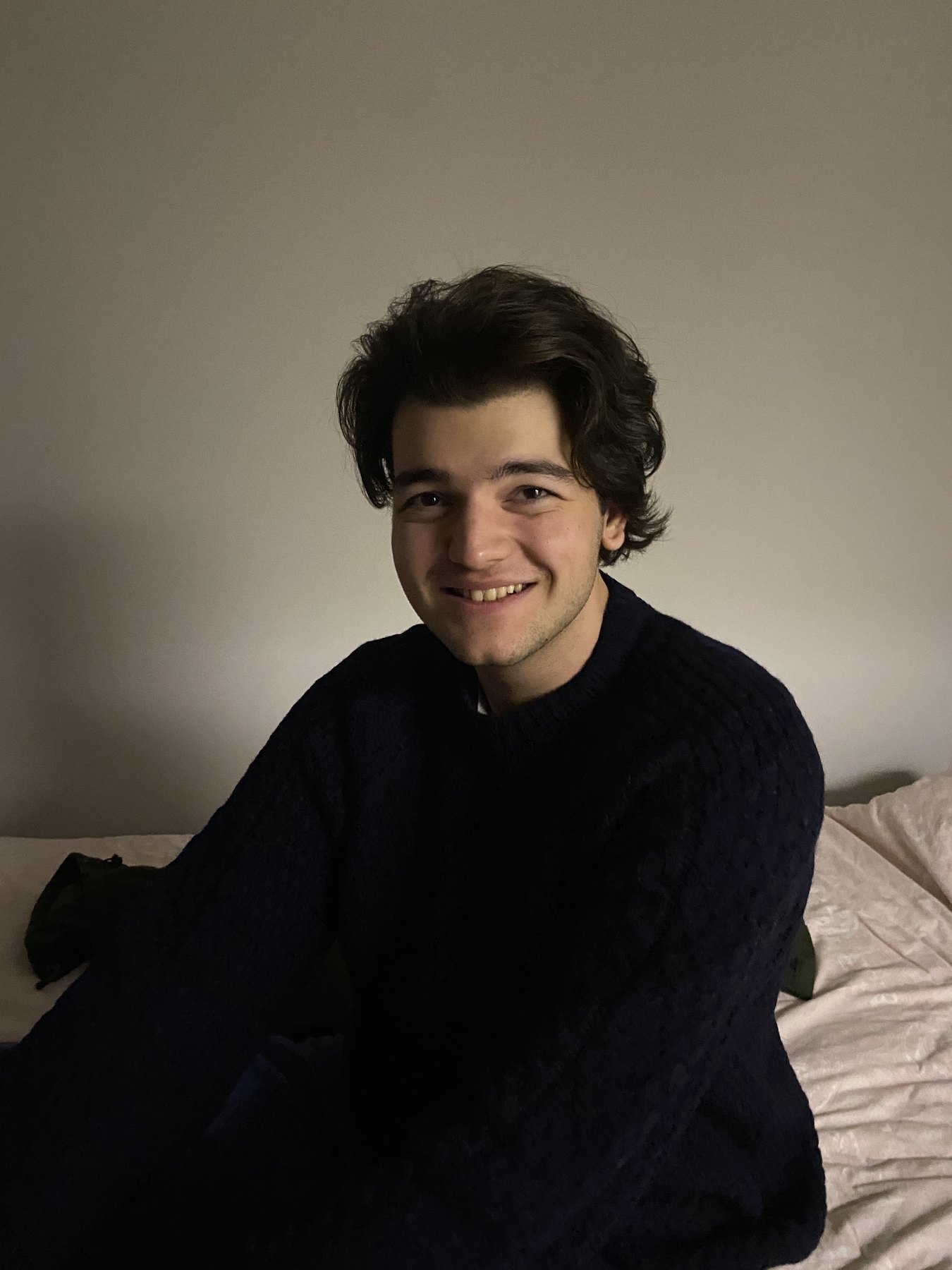
Background
I came into engineering through the practical side first: kits, circuits, small
robots, and the satisfaction of changing something physical and seeing it respond.
UCSC made that interest less cute and more useful. The objects got harder: biosensor
chips, PCB layouts, IMU logs, cleanroom steps, CAD fixtures, deposition hardware,
and estimators that have to be checked against something outside themselves.
The part I keep coming back to is the handoff. It is not enough for a thing to work
once while I am standing next to it. A chip process needs notes. A board needs a
bring-up path. A fixture needs to seal for someone else. If the next person has to
reverse-engineer my intent, I did not really finish.
Engineering direction
I like engineering where the failure mode is visible enough to argue with. On TARAF,
that means drift, stance detection, bad trials, and whether the IMU estimate matches
a camera reference. In the lab, it means contacts, gasket pressure, chip handling,
signal routing, and whether a result is actually measuring the thing we think it is.
Teaching fits that same instinct, but I do not want to inflate it into a mission
statement. I grade and tutor because explaining a circuit or control problem makes
the weak spots obvious. If I cannot explain the physical meaning without hiding
behind notation, I probably do not understand it well enough yet.
Current work
TARAF
GPS-free pedestrian navigation using a foot-mounted IMU, ESKF/ZUPT/ZARU state
estimation, side-profile ArUco validation, and offline optimizer tooling. My focus
is the controls and ML side: drift correction, validation, and movement-aware tuning.
Yanik Lab
Biosensing hardware and workflow support: Ti/Au chip fabrication, cleanroom process,
Opentrons-adjacent assay work, signal-delivery electronics, optical inspection,
and electrochemical deposition/sensing interfaces.
Teaching
Grader for ECE 135 and group tutor for ECE 130/230. The useful part is concrete:
work through the circuit, control, or signal problem until the symbols point back
to the system instead of floating away from it.
Technical areas
Hardware & Fabrication
PCB design (KiCad) Photolithography E-beam evaporation Plasma cleaning Lift-off Ti/Au thin-film chips Cleanroom process
Embedded Systems
ESP32 BNO055 IMU I2C / SPI Sensor calibration Firmware in C
Signal & Estimation
Low-pass filtering ZUPT / ZARU ESKF Quaternion math Stride detection LQR / LQG State estimation
Software & Data
Python MATLAB OpenCV ArUco tracking scikit-learn Random Forest / SVM Jupyter Git
Lab & Automation
Opentrons OT-2 555-timer signal generation Automated assay workflows Electrochemical multiplexing EmStat Pico
Teaching & Pedagogy
ECE 135 grading ECE 130/230 group tutoring Concept-first explanations Problem-session support Engineering education